
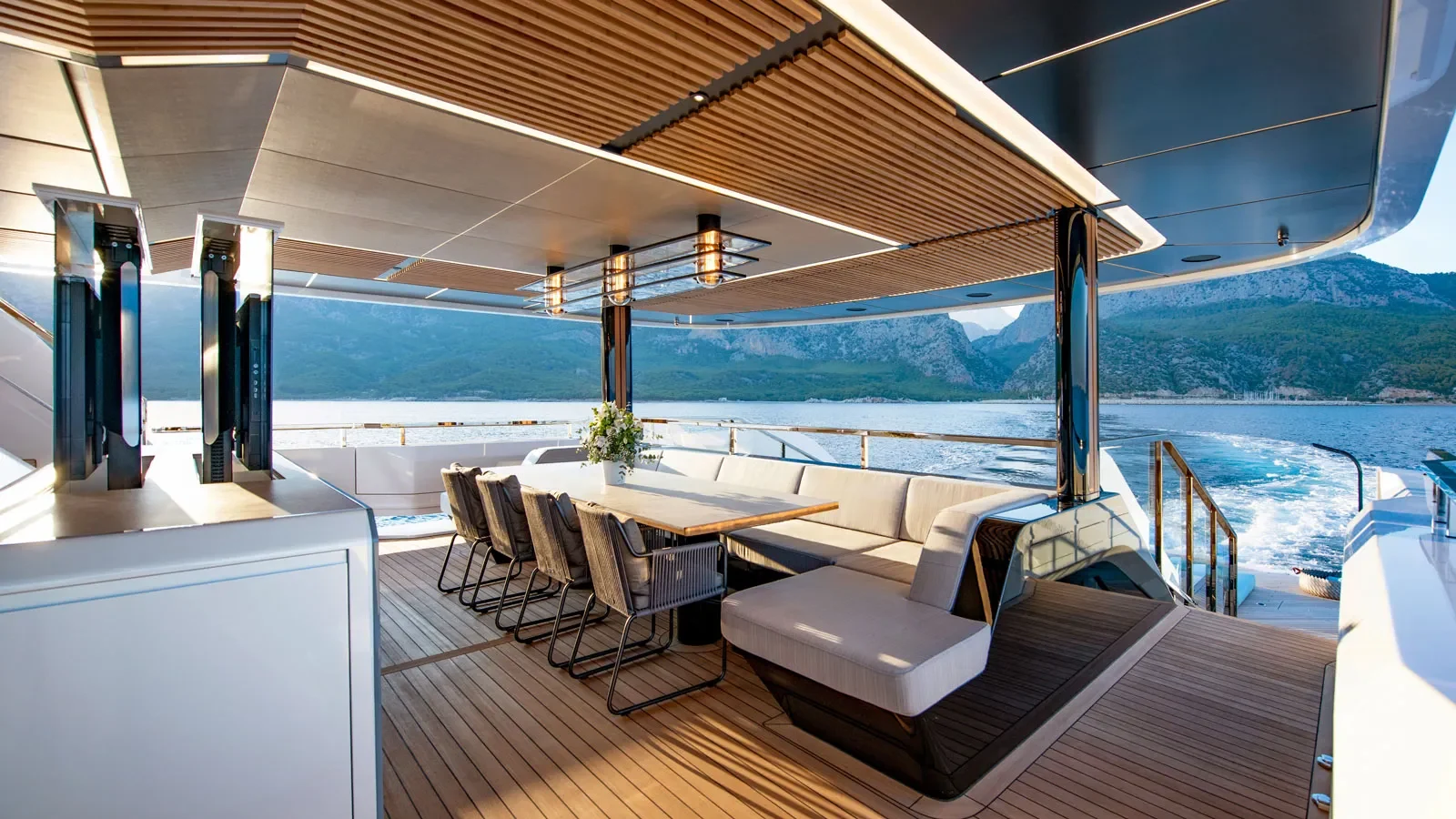
Yacht Automation Systems — Control4 for New Builds and Refits
More than 90 yachts since 2004: lighting, climate, audio, video and networking in a single system.
Automation on a yacht is not a house repeated at sea. Limited power, constant motion, salt and humidity, connectivity that changes by the hour, and a shipyard schedule that will not wait — each of these forces the system to be designed differently from the ground up. aSAY VAD has been the official Control4 distributor for Turkey since 2005, and has worked on more than 90 yacht projects since 2004, on refits and new builds alike, alongside shipyards and owners.
We keep a six-person technical team dedicated to yacht projects alone — three based in Istanbul, three in the Antalya region. Alongside the shipyards in Turkey, we also provide design and engineering consultancy to shipyards abroad.
Why Automation at Sea Is Different
Connectivity comes first
Ashore, a single internet line is enough. On a yacht, marina, cellular and satellite links are managed together and the system moves between them without a break. Stable wireless coverage from below deck to the sun deck is the ground everything else stands on.
Multi-zone audio
From the saloon to the deck, from cabins to the jacuzzi, dozens of zones are managed in one system; audio is distributed over an IP backbone so each zone runs its own source and level. Deck speakers are specified with enclosures that survive salt, humidity and UV.
Video
Saloon and cabin displays are recessed flush with the joinery line; concealment and lift solutions are part of the design. On open decks, screens readable in direct sunlight are used.
Climate
Fan-coil control cabin by cabin, with guest and crew areas managed separately and scenes that change between passage and anchor.
Lighting and night passage
Scenes are built so they never compromise visibility from the bridge at night; exterior lighting emphasises the profile of the hull.
Crew and guests
The interface has to be simple enough for a guest boarding for the first time and deep enough to speed up the crew's work; scenes reset at guest changeover.
Commissioning
The system advances in step with paint and joinery; every zone is verified individually on sea trials, and the crew is left with training and documentation at handover.
The Architecture We Use on Yachts
A wired backbone — a deliberate choice
In houses ashore, wireless solutions lead. On a yacht we choose a wired architecture for stability. Control4's DIN-rail modules and the wired LUX keypad series are made for this work: a central panel in the technical space, elegant and robust control in the living areas.
Araknis network backbone
The switches and access points of Araknis, the networking brand in our portfolio, are engineered to carry entertainment infrastructure — a backbone with stable coverage throughout the vessel and headroom for AV traffic.
MoIP video and audio distribution
Video and audio are distributed over the IP backbone: from any source to any screen and any zone, without hitting a matrix limit. It is planned channel by channel and grows as the vessel grows.
Episode Extreme — marine-grade audio
On decks and in wet areas we use Episode's Extreme series: IP67 sealing, salt-spray testing, tolerance to 90 °C, a sealed enclosure and a corrosion-resistant grille. This series was built for exactly these conditions.
SunBrite outdoor displays
The televisions most often chosen for open decks and exterior areas: brightness readable in direct sun, and a chassis built for humidity and salt.
Strong slide-out racks
Technical space is precious on a yacht. Strong's rail-mounted slide-out racks give full service access to equipment in confined compartments — maintenance without removing devices.
WattBox power management
Rack power is managed outlet by outlet with WattBox, so a misbehaving device can be restarted remotely. OvrC compatibility means system health can be monitored while the yacht is at sea.
Design and Engineering
Most of the work finishes before anything is installed: system architecture, technical specification, equipment and cable schedules, zone plan and network topology. Channel-level planning for multi-zone audio, a 10 Gbit AV backbone, multi-path connectivity architecture and flush-mount details are all settled at project stage — so there are no surprises at the shipyard. The specifications and system designs we prepare are also applied in projects at shipyards abroad.
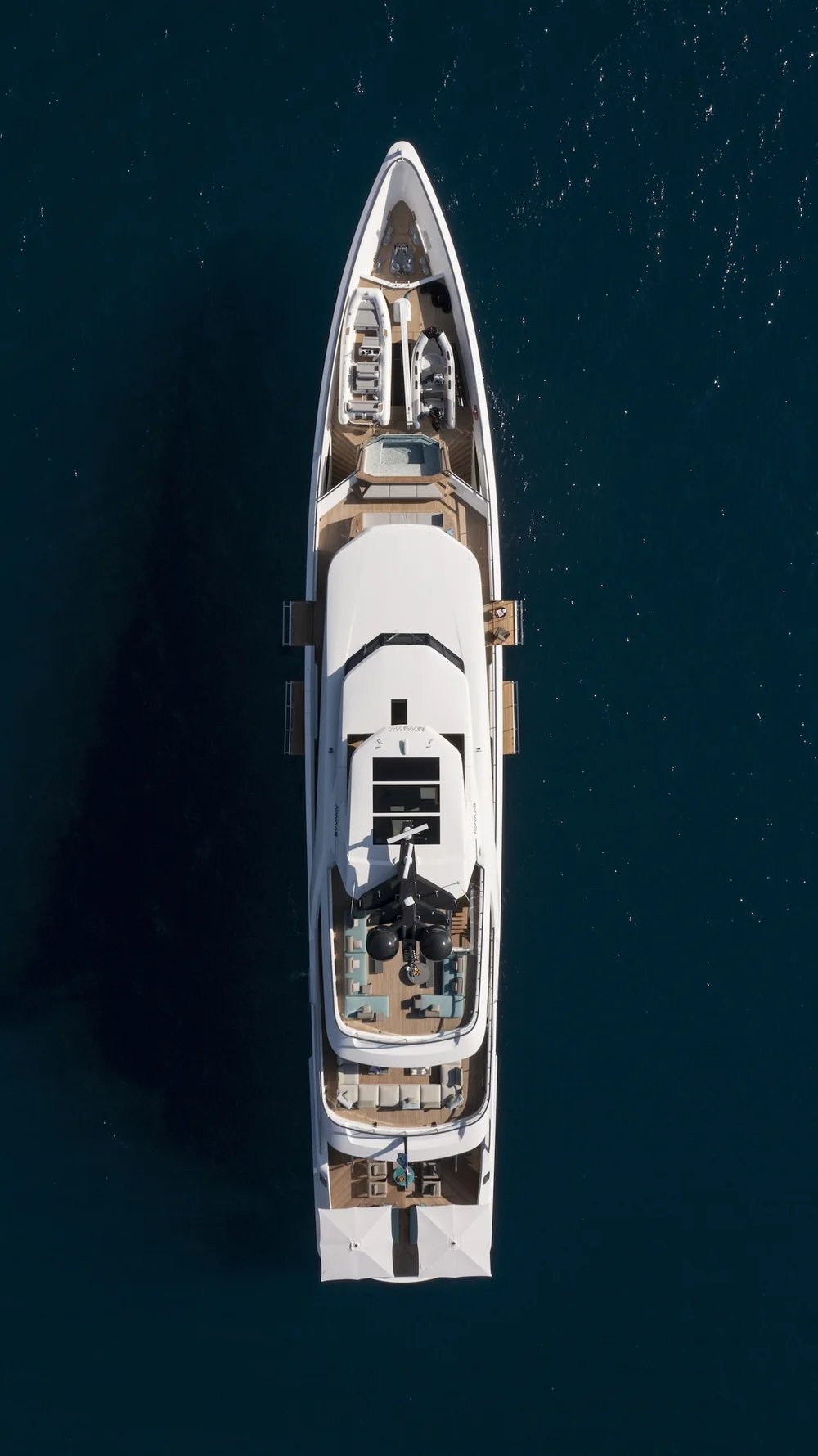
At sea, luxury lives in the details.
Engineering you never see, comfort you always feel.
What We Do — and What We Don't
Navigation, machinery monitoring and vessel-control automation are not our field, and we do not install these systems. Where they support it, we integrate with the existing navigation and monitoring systems and bring the relevant information into the comfort interface. What we do is bring lighting, climate, shades, audio, video, networking and security together in one system — and we work in depth in every one of those areas.
Refit or New Build
On a new build, the system is designed alongside the hull and joinery drawings; cabling is planned while the vessel is still in frame. On a refit, the existing infrastructure sets the terms: which cables can be kept, which routes will be renewed, and how long the yacht will stay alongside are all established at the outset — when the plan is right, stripping out is kept to a minimum.
From Our References
— and more than 90 projects since 2004.
Shipyards we work with:
Alia Yachts, Numarine, Bilgin Yachts, Sunrise Yachts, Alpha Custom Yachts, Dunya Yachts, AES Yacht, Venture Yachts, RMK Marine, URSA Shipyard, KRM Yacht, Sarp Yacht, CMB Yachts, Dearsan